The real inspiration, process, and questions behind each title — drawn from the same essays where Sandeep first wrote about them, not a marketing recap.
Every book on this page was written the same way: in the margins of a full-time career in digital transformation — early mornings before calls started, on flights, in the gaps between one deliverable closing and the next opening. There was no cabin in the woods, no protected sabbatical. Just taken time, and a low bar for what counted as progress.
People assume a book like this starts with a plot. For Sandeep, it started with a discomfort — a question that came out of his working life inside systems built on trust: cloud architectures, security frameworks, partnership agreements. What happens the moment that trust turns out to be misplaced, in a field where most people assume the science itself is neutral? That question, long before there was a triangle, a game, or a single named character on the page, is the real seed of the book.
The research wasn't scoped like a technology deliverable — it happened sideways, as an extension of reading he was already doing around cloud security, data integrity, and the quieter ethical questions that come up wherever science, technology, and money intersect. Much of what ends up dramatized in the novel began as margin notes on things he was reading for entirely different reasons.
The title isn't decoration, either. Every serious technical environment runs, underneath its official process, on an informal game of incentives — who gets credit, who takes the blame, what gets escalated and what gets quietly absorbed. Sandeep wanted to write the version where that game's stakes stop being a missed quarter and become something irreversible.
"Every enterprise deal I've ever worked has the bones of a thriller in it... I'd just been calling it 'the deal cycle' instead of 'the plot.'" Two decades of enterprise technology sales — sharpening a half-articulated problem in a first conversation, handling objections in the middle of a deal, earning a close instead of springing it — turned out to be the same structural discipline good plotting demands: reveal too much, too early, and the reader (or the buyer) stops turning pages.
The honest answer to "when did you write it" is: in the margins. Early mornings before calls started, on flights, in the gaps between deliverables — built the way most enterprise transformation programs actually get built, in disciplined, imperfect increments, with the throughline held in his head across long gaps rather than on the page.
Read the full story: Writing The Alchemist Triangle →
Read more: What Two Decades in Sales Taught Me About Plotting →
Co-authoring a poetry collection, Sandeep has written, is a different kind of vulnerable than co-leading a technology program. In a business partnership you can retreat to your lane — "I own the architecture, you own the commercial terms" — and still call it collaboration. Poetry doesn't allow that kind of division: every line in the collection had to survive being read by co-author Arpita Jain, who had just as much right to change it as he did.
Years of enterprise work condition you to think in terms of ownership — this deliverable is mine, that decision is yours. Co-writing poetry broke that instinct almost immediately. A verse that started as his would come back changed in ways he hadn't anticipated, and it was usually better for the change. Even the title — Manzile, meaning destinations, and Khwahish, meaning a wish or a longing — captured something neither of them would have landed on writing alone.
One professional skill did transfer cleanly: knowing how to disagree with someone whose judgment you respect, without either person walking away from the table. Years spent building joint go-to-market programs and cross-border partnerships mattered just as much line-editing a verse in Hindi as it did structuring a partnership agreement — except in poetry, there's no contract to fall back on when you disagree. There's only whether the two of you still trust each other's ear.
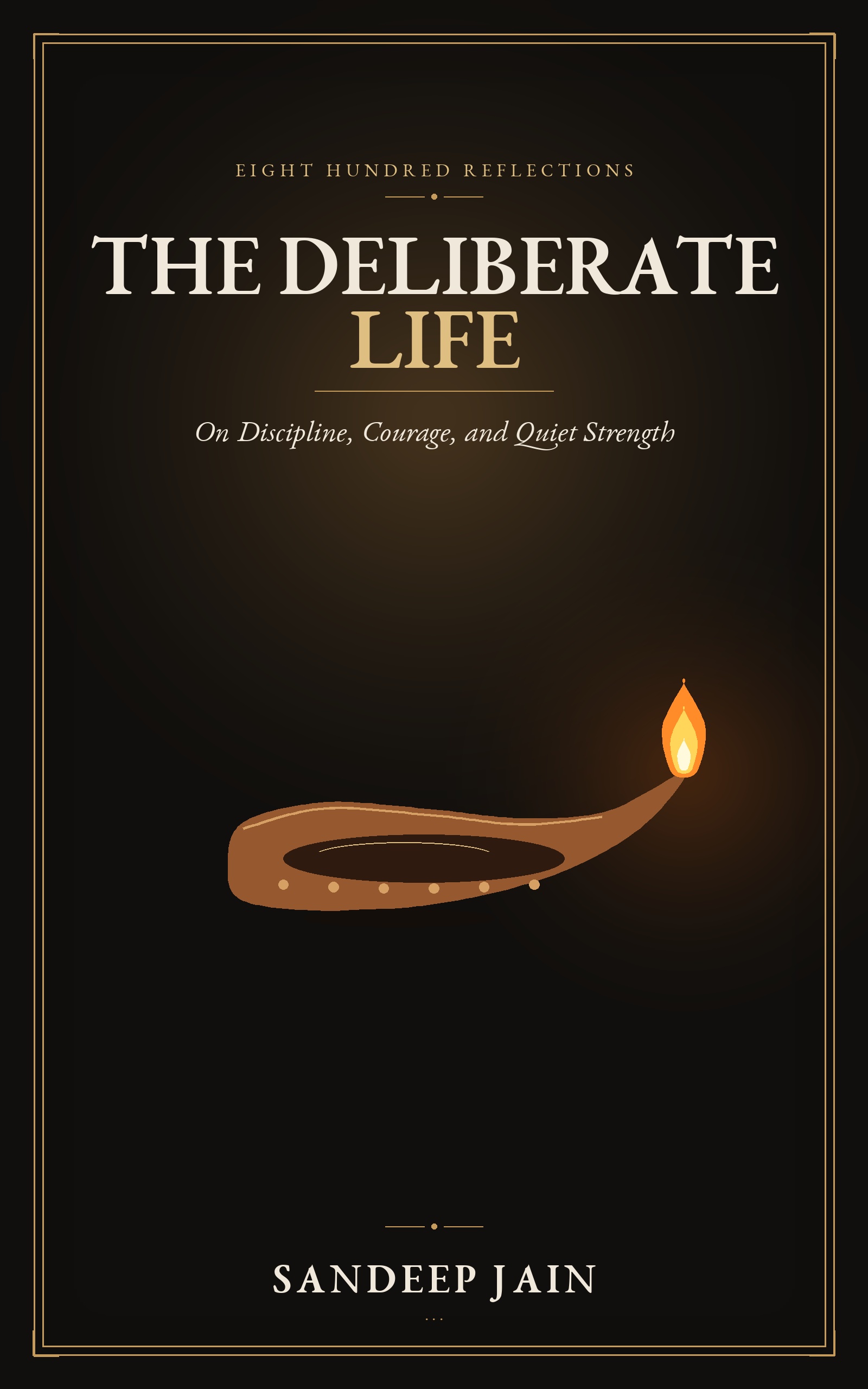
A collection of eight hundred short reflections on what it takes to live with intention — discipline practiced quietly, courage exercised without an audience, and the kind of strength that shows up in daily choices rather than dramatic moments. Written as a companion for readers who want to think more deliberately about how they spend their days, it's meant to be dipped into rather than read cover to cover in one sitting.
"What if the most helpful man in the room is the one you should fear?"
When a devastating breach rips through Whitefield's tech corridor, a CBI Cyber Cell investigator is pulled into a case where the trail of stolen data, quiet sabotage, and misplaced trust leads somewhere no one expects — a tech thriller about how easily the most trusted person in the room can become the most dangerous.